
Mercedes-Benz Winter Driving in BC: Tire Requirements and Common Problems
Mercedes-Benz vehicles are designed for comfort, safety, and refined driving performance. But when winter arrives in British Columbia, even a well-maintained Mercedes can experience problems related to colder temperatures, wet roads, changing tire pressures, and winter driving conditions.
For drivers in Richmond, Vancouver, Burnaby, and across the Lower Mainland, winter does not always mean heavy snowfall. More often, it means persistent rain, cold mornings, slippery roads, and occasional freezing temperatures. These conditions can affect everything from tire traction and braking performance to battery health, electronics, and suspension components.
Mercedes-Benz models such as the C-Class, E-Class, GLC, GLE, and S-Class are equipped with advanced safety and comfort systems, but they still require proper seasonal maintenance.
At CG Eurosports in Richmond, BC, we provide Mercedes-Benz maintenance, diagnostics, and repairs with attention to the unique systems found in European vehicles.
Understanding BC’s winter tire requirements and recognizing common Mercedes-Benz winter problems can help prevent unexpected repairs and keep your vehicle performing as intended.
BC Winter Tire Requirements: What Mercedes-Benz Owners Need to Know
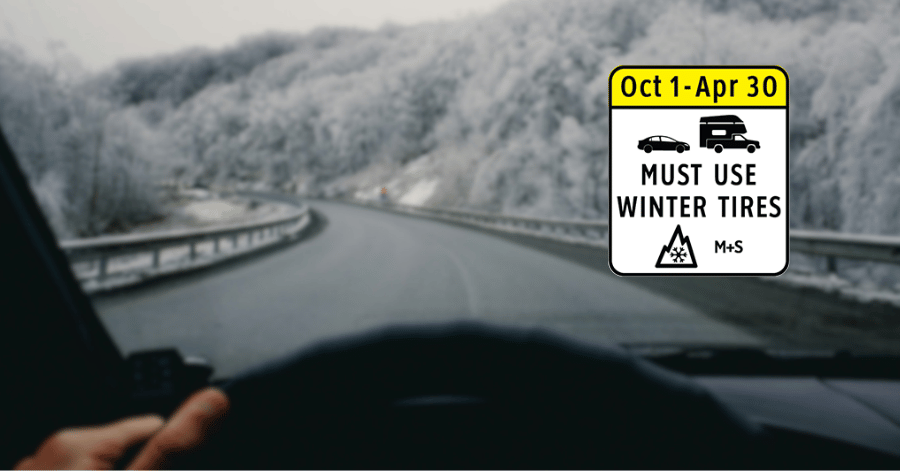
British Columbia requires qualifying winter tires on many designated highways beginning October 1 each year.
Depending on the route, winter tire requirements remain in effect until March 31 or April 30.
For passenger vehicles, qualifying winter tires must:
- Display the M+S (Mud and Snow) marking or the three-peaked mountain and snowflake symbol
- Have a minimum tread depth of 3.5 mm
- Be suitable for the vehicle and installed in accordance with applicable requirements
Both M+S and mountain snowflake tires meet BC’s minimum legal winter tire definition. However, they do not necessarily provide the same traction in snow and ice.
The three-peaked mountain snowflake marking identifies tires that meet specific snow-traction performance criteria, while M+S markings alone do not provide the same assurance of tested snow performance.
For Mercedes-Benz owners who regularly drive to Whistler, the BC Interior, or other mountain areas, dedicated winter tires are generally recommended.
Winter tires aren’t mandatory on every road in Richmond or Vancouver, but drivers must follow requirements on designated routes.
You can review the official requirements and designated highway maps on the Government of British Columbia winter tire website.
Does Mercedes-Benz 4MATIC Still Need Winter Tires?
Mercedes-Benz 4MATIC all-wheel drive is designed to improve traction and stability by distributing power between the wheels.
It can be particularly useful when accelerating on slippery roads or driving in changing weather conditions.
However, 4MATIC does not replace the need for appropriate winter tires.
All-wheel drive helps manage engine power, but braking and cornering still depend heavily on tire traction.
Even a Mercedes-Benz equipped with 4MATIC can experience reduced control when using tires that are unsuitable for cold or icy conditions.
Important considerations include:
- Acceleration: 4MATIC helps distribute power for improved traction.
- Braking: Stopping distance depends on tire grip, road conditions, and braking system performance.
- Cornering: Tire condition affects how well the vehicle maintains stability through turns.
- Snow and ice: All-wheel drive does not prevent sliding when tire traction is limited.
- Electronic safety systems: ABS, ESP, and traction control depend on available tire grip to operate effectively.
For a Mercedes-Benz GLC, GLE, E-Class 4MATIC, or other all-wheel-drive model, the correct tires remain one of the most important parts of winter preparation.
Mercedes Winter Tires vs. All-Weather Tires
Not every Mercedes-Benz owner needs the same tire setup.
For drivers who mainly commute around Richmond and Vancouver, quality all-weather tires may offer a practical year-round option.
For drivers who frequently encounter snow, ice, freezing temperatures, or mountain roads, dedicated winter tires generally provide stronger winter traction.

All-Weather Tires
All-weather tires are designed to handle a range of temperatures and road conditions.
They may be suitable for:
- Daily commuting around Metro Vancouver
- Moderate winter temperatures
- Wet roads and occasional light snowfall
- Drivers who prefer one tire set throughout the year
- Drivers who prefer one tire set throughout the year
Many all-weather tires carry the three-peaked mountain snowflake symbol, although specifications should always be checked before purchasing.
Dedicated Winter Tires
Dedicated winter tires use specialized rubber compounds and tread patterns designed for colder temperatures.
They generally offer:
- Improved grip on snow and ice
- Better traction during cold-weather braking
- More predictable handling in challenging conditions
- Drivers who prefer one tire set throughout the year
- Improved control during winter highway travel
Mercedes-Benz recommends seasonal tires appropriate to the temperature, with winter tires recommended when temperatures consistently fall below approximately 7°C.
For owners of Mercedes-AMG models or vehicles equipped with performance summer tires, seasonal tire changes are particularly important.
Summer performance tires can lose flexibility and grip in colder temperatures, even when roads appear dry.
Common Mercedes-Benz Problems to Watch for During Winter
Cold weather and persistent moisture can expose existing problems that may not be noticeable during warmer months.
Not every Mercedes-Benz will experience these issues, and symptoms can vary depending on the model, age, mileage, and maintenance history.
However, the following areas deserve attention when preparing your Mercedes for winter.
1. Battery Problems and Cold-Weather Starting Issues
Modern Mercedes-Benz vehicles rely on sophisticated electrical systems to operate everything from engine management and climate control to safety features and infotainment.
Cold temperatures can reduce battery performance, particularly when the battery is already aging.
Common symptoms include:
- Slow engine cranking
- Difficulty starting on cold mornings
- Battery or electrical system warning messages
- Start/stop function becoming unavailable
- Intermittent electronic warnings
- Interior electronics behaving unexpectedly
Some Mercedes-Benz models also use auxiliary batteries or additional electrical support systems.
A battery-related warning does not always mean the main battery needs replacement. Proper testing helps determine whether the issue involves the battery, charging system, auxiliary components, or another electrical fault.
💡Recommendation: Have battery health and charging performance checked before winter, especially if the vehicle is used for frequent short trips.
2. Tire Pressure Warnings When Temperatures Drop
Mercedes-Benz vehicles use tire pressure monitoring systems to help alert drivers when tire pressure changes.
As outside temperatures fall, tire pressure naturally decreases.
This can trigger a tire pressure warning even when the tires have no puncture.
Signs to watch for include:
- Tire pressure warning on the dashboard
- Repeated low-pressure notifications
- Uneven tire wear
- Changes in steering feel
- Reduced driving stability
Do not automatically assume every warning is caused by cold weather. A slow puncture, leaking valve, damaged wheel, or faulty sensor may also be responsible.
💡 Recommendation: Check tire pressure when tires are cold, inflate to the pressure specified for your Mercedes-Benz, and reset or calibrate the monitoring system when required.
3. AIRMATIC Suspension Problems in Cold Weather
Some Mercedes-Benz models, including certain E-Class, S-Class, GLE, and GLS vehicles, are equipped with AIRMATIC air suspension.
This system uses electronically controlled air springs and related components to provide ride comfort and adjust vehicle height.
As components age, cold weather can make existing weaknesses more noticeable.
Possible warning signs include:
- Vehicle sitting lower on one corner
- Uneven ride height after parking overnight
- Suspension taking longer to raise
- Air compressor running frequently
- Suspension warning messages
- Rough or unusually firm ride
Potential causes include air leaks, worn air springs, compressor problems, valve block issues, or ride-height sensors.
Not every suspension warning requires replacement of the full system.
💡 Recommendation: Diagnose unusual ride height or suspension warnings early, as operating a leaking system can place additional strain on the compressor.
4. Heater, Defroster and Climate Control Problems
A properly functioning heating and defrosting system is essential for visibility and comfort during winter.
Mercedes-Benz vehicles may use sophisticated automatic climate control systems with multiple temperature zones, sensors, and electronically controlled airflow components.
Warning signs include:
- Weak cabin heating
- Windows taking too long to defog
- Uneven temperatures between vents
- Unusual blower motor noise
- Inconsistent airflow
- Coolant temperature concerns
Possible causes include low coolant, thermostat problems, restricted heater performance, blower issues, or climate control components.
💡 Recommendation: Check the heating and windshield defrosting systems before colder weather arrives. Persistent fogging or poor defrosting performance should be inspected before driving in conditions where visibility may be compromised.
5. Brake Noise, Rotor Corrosion and Reduced Braking Confidence
Richmond’s wet winter weather can contribute to surface rust on brake rotors, particularly when a vehicle sits overnight or is used mainly for short trips.
A brief scraping noise after rain may be caused by light surface rust and can disappear after normal braking.
However, drivers should not ignore persistent grinding, vibration, or poor braking performance.
Common warning signs include:
- Grinding or squealing brakes
- Vibration when braking
- Brake pad wear warning
- Uneven braking feel
- Corrosion around braking components
- Reduced stopping confidence
Mercedes-Benz models may also use electronic brake wear sensors, advanced ABS systems, and electronic parking brakes that require model-specific diagnostic procedures.
💡 Recommendation: Inspect brake pads, rotors, sensors, and brake fluid condition before winter, especially if the vehicle has been driven infrequently.
6. Windshield Wipers, Washer Systems and Visibility Issues
Winter driving around Vancouver often means heavy rain, road spray, and reduced visibility rather than continuous snowfall.
Mercedes-Benz vehicles may use rain-sensing wipers, heated components, and advanced driver assistance cameras mounted near the windshield.
Worn blades, dirty camera areas, or washer system problems can affect visibility and, in some cases, driver assistance functions.
Watch for:
- Wiper streaking or skipping
- Poor windshield clearing
- Weak washer fluid spray
- Rain sensors behaving inconsistently
- Camera or driver assistance warnings
- Windshield fogging
💡 Recommendation: Replace worn wiper blades, use suitable winter washer fluid, and keep the windshield and sensor areas clean.
Mercedes-Benz Winter Maintenance Checklist
A seasonal inspection can help identify developing problems before cold and wet weather makes them more noticeable.
For Mercedes-Benz vehicles, important inspection areas include:
- Tires: Winter rating, tread depth, pressure, wear, and wheel condition
- Battery: Battery health, charging system, and electrical warnings
- Brakes: Pads, rotors, sensors, brake fluid, and parking brake operation
- Cooling system: Coolant condition, leaks, thermostat, and antifreeze protection
- Suspension: Air suspension operation, ride height, bushings, and related components
- Heating and defrosting: Cabin heat, airflow, windshield clearing, and climate controls
- Wipers and washer system: Blade condition, washer fluid, and spray operation
- Diagnostic systems: Dashboard warnings, ABS, ESP, and traction control faults
At CG Eurosports, our approach focuses on identifying actual problems rather than replacing components based on assumptions.
Richmond and Vancouver Winter Driving Conditions
Winter driving in Metro Vancouver creates a different set of challenges compared with regions that experience prolonged snowfall.
Richmond, Vancouver, Burnaby, Delta, and surrounding areas frequently experience heavy rain, standing water, cold mornings, and periods of near-freezing temperatures.
These conditions can contribute to:
- Tire pressure fluctuations
- Reduced traction on wet roads
- Surface corrosion on brakes
- Moisture-related electrical concerns
- Battery performance issues
- Wiper and visibility problems
- Suspension wear becoming more noticeable
- Unexpected icy patches during cold mornings
For daily Mercedes-Benz commuters, short trips and frequent stop-and-go driving can also affect battery charging and increase brake wear.
Drivers who regularly travel to Whistler, the BC Interior, or mountain highways should prepare for significantly colder temperatures and more demanding winter road conditions.
Having appropriate tires and keeping the vehicle properly maintained can reduce the risk of unexpected problems
When to Book Mercedes-Benz Winter Service
You should arrange an inspection if you notice:
- Battery or starting problems
- Repeated tire pressure warnings
- Uneven tire wear
- Braking vibration or grinding
- Suspension warning messages
- Vehicle sitting unevenly after parking
- Heater or defroster problems
- ABS or ESP warning lights
- Unusual noises over bumps
- Coolant leaks or temperature warnings
- Poor windshield visibility
- Changes in handling or braking performance
It is also worth booking a winter inspection if your Mercedes-Benz has not been serviced recently or if you are planning a winter road trip.
Catching a developing problem early can help prevent a more expensive repair later.
Mercedes-Benz Winter Driving FAQs
Winter tires are required on many designated BC highways from October 1 until March 31 or April 30, depending on the route.
Qualifying tires must have M+S or the three-peaked mountain snowflake marking and at least 3.5 mm of tread depth.
Winter tires are not mandatory on every road in Richmond or Vancouver, but Mercedes-Benz drivers must comply with requirements on designated routes.
Yes. Mercedes-Benz 4MATIC improves traction when accelerating, but it does not replace appropriate winter tires.
Braking and cornering performance still depend on tire grip. Dedicated winter tires are recommended for snowy and icy conditions, including on 4MATIC vehicles.
Quality all-weather tires may be suitable for daily commuting around Metro Vancouver, particularly for drivers who encounter only occasional light winter conditions.
However, dedicated winter tires generally provide better traction on snow and ice.
Tire selection should also account for the Mercedes-Benz model, wheel size, driving habits, and manufacturer specifications.
Tire pressure decreases as temperatures fall, which can trigger the tire pressure monitoring system.
However, repeated warnings can also indicate a slow leak, puncture, damaged valve, or sensor problem.
Always check tire pressures rather than assuming the warning is caused by the weather.
Cold temperatures reduce battery performance and can expose an aging or weak battery.
Modern Mercedes-Benz vehicles also rely on extensive electrical systems, and frequent short trips may prevent the battery from recharging fully.
Battery and charging system testing can identify whether replacement or another repair is needed.
Cold temperatures can make existing air suspension leaks or component weaknesses more noticeable.
Symptoms may include uneven ride height, slow suspension adjustment, compressor noise, or dashboard warnings.
A proper diagnostic inspection can determine whether the issue involves air springs, the compressor, sensors, or other suspension components.
A seasonal inspection before winter is a practical precaution, particularly for older vehicles, high-mileage models, or Mercedes-Benz vehicles with existing warning lights.
Maintenance intervals should follow the manufacturer's recommendations, with additional checks based on vehicle condition and driving habits.
Why Choose CG Eurosports for Mercedes-Benz Winter Maintenance?
Mercedes-Benz vehicles combine sophisticated electronics, advanced safety systems, and model-specific mechanical components.
Proper maintenance requires more than simply replacing parts when a warning light appears.
At CG Eurosports, our Mercedes-Benz service approach focuses on accurate diagnosis, careful inspection, and clear recommendations.
Our service includes attention to:
- Mercedes-Benz diagnostics and maintenance
- Electrical and battery-related problems
- Brake system inspections and repairs
- Suspension and steering concerns
- Cooling system issues
- Warning light diagnostics
- Tire wear and related vehicle safety concerns
- Preventative maintenance
Whether you drive a C-Class, E-Class, GLC, GLE, S-Class, or Mercedes-AMG, understanding the condition of your vehicle helps you make informed maintenance decisions.
Looking for Mercedes-Benz Winter Service in Richmond, BC?
CG Eurosports provides specialized Mercedes-Benz repair, diagnostics, and maintenance in Richmond, BC, serving drivers throughout Vancouver, Burnaby, Delta, and Metro Vancouver.
If your Mercedes-Benz is showing battery warnings, tire pressure alerts, suspension concerns, brake noise, or other cold-weather problems, a professional inspection can help identify the cause before it becomes more serious.
Prepare your Mercedes-Benz for BC winter driving with practical maintenance and experienced European vehicle diagnostics.
Post Tags :
Share :